
The most significant shock the film industry has encountered in 2025? The resurgence of horror as a dominant force at the UK film market.
As a category, it has impressively surpassed earlier periods with a 22% year-on-year increase for the UK and Irish box office: £83.7 million in 2025, versus £68 million the previous year.
“Last year, no horror film reached £10m at the UK or Irish box office. This year, five films have,” comments a box office editor.
The major successes of the year – a recent horror title (£11.4 million), Sinners (£16.2m), the latest Conjuring installment (£14.98 million) and the sequel to a classic (£15.54m) – have all hung about in the theaters and in the popular awareness.
Although much of the professional discussion highlights the unique excellence of certain directors, their achievements indicate something evolving between viewers and the genre.
“I’ve heard people say, ‘Even if you don’t like horror this is a film you need to see,’” explains a head of acquisition.
“These productions twist traditional elements to craft unique experiences, resonating deeply with modern audiences.”
But apart from aesthetic quality, the steady demand of horror movies this year suggests they are giving audiences something that’s much needed: therapeutic relief.
“Currently, cinema mirrors the widespread anger, fear, and societal splits,” observes a horror podcast host.
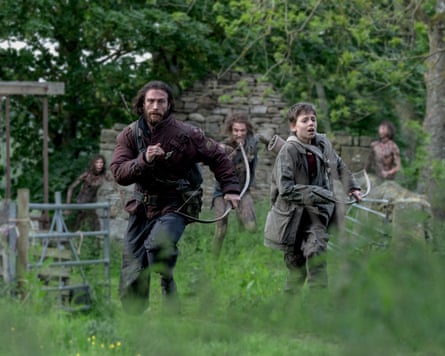
“Scary movies excel at tapping into viewers' fears, amplifying them, allowing you to set aside daily worries and concentrate on the on-screen terror,” explains a noted author of horror film history.
Against a real-world news cycle featuring war, border tensions, far-right movements, and environmental crises, ghosts, monsters, and mythical entities resonate a bit differently with filmg oers.
“Some research suggests vampire film popularity correlates with financial downturns,” comments an star from a recent horror hit.
“This symbolizes the way modern economies can exhaust human spirit.”
Historically, public discord has always impacted scary movies.
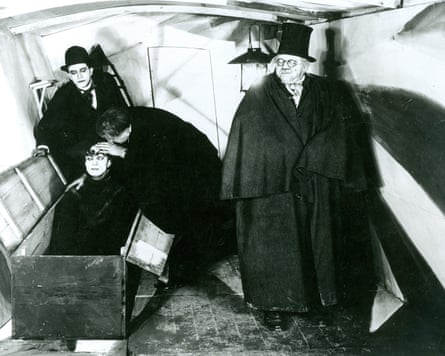
Analysts highlight the boom of European artistic movements after the the Great War and the unstable environment of the 1920s Europe, with films such as The Cabinet of Dr Caligari and the iconic vampire tale.
Later occurred the economic crisis of the 30s and iconic horror characters.
“Consider the Dracula narrative: an outsider from the east brings a corrupting influence that permeates society and challenges its heroes,” notes a academic.
“Thus, it mirrors widespread fears about migration.”
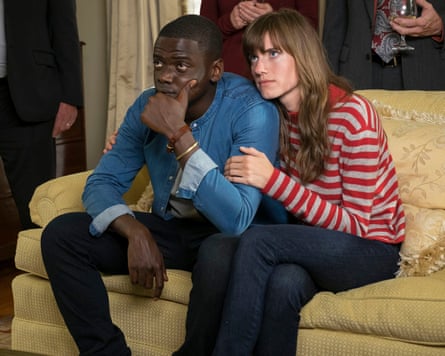
The boogeyman of migration influenced the newly launched supernatural tale The Severed Sun.
Its writer-director explains: “I aimed to delve into populist rhetoric. Specifically, calls to restore a mythical past that favored a privileged few.”
“Additionally, the notion that acquaintances might unexpectedly voice extreme views, leaving others shocked.”
Perhaps, the current era of celebrated, politically engaged fright cinema started with a sharp parody released a year after a contentious political era.
It introduced a recent surge of visionary directors, including various prominent figures.
“That period was incredibly stimulating,” comments a filmmaker whose movie about a deadly unborn child was one of the era’s tentpole movies.
“In my view, it marked the start of a phase where filmmakers embraced wildly creative horror with artistic ambitions.”
The director, currently developing another scary story, continues: “During the past decade, viewers have become more receptive to such innovative approaches.”
Concurrently, there has been a reconsideration of the overlooked scary films.
Recently, a independent theater opened in the capital, showing cult classics such as a quirky horror title, a classic adaptation and the 1989 remake of Dr Caligari.
The fresh acclaim of this “raw and chaotic” genre is, according to the theater owner, a direct reaction to the algorithmic content churned out at the box office.
“This responds to the sterile output from major studios. Today's cinema is safer and more repetitive. Many popular movies feel identical,” he explains.
“In contrast [these alternative films] are a bit broken. It’s like they’ve erupted out of someone’s subconscious and been planted out there without corporate interference.”
Scary movies continue to disrupt conventions.
“They have this strange ability to seem old fashioned and up to the minute, both at the same time,” observes an specialist.
Besides the re-emergence of the mad scientist trope – with several renditions of a well-known story upcoming – he predicts we will see fright features in the near future reacting to our modern concerns: about tech supremacy in the coming decades and “supernatural elements in political spheres”.
Meanwhile, a religious-themed scare film The Carpenter’s Son – which depicts the events of Mary and Joseph’s struggles after the nativity, and includes celebrated stars as the holy parents – is set for release later this year, and will certainly create waves through the Christian right in the America.</


